
What are we going to eat? - The complex challenges of space food
A small introduction to the complex world of space food. Written by Tor Blomqvist.
Missions to the moon come with a myriad of challenges and even though we may have the technology to bring humans to the moon, we do not have the required food systems to sustain them. Ultimately food is a limiting factor for human space travel. However, sustaining astronauts on the Moon is not easy and comes with a plethora of new challenges.
Let start with an introduction to the subject before delving a bit deeper into each of these complex areas.
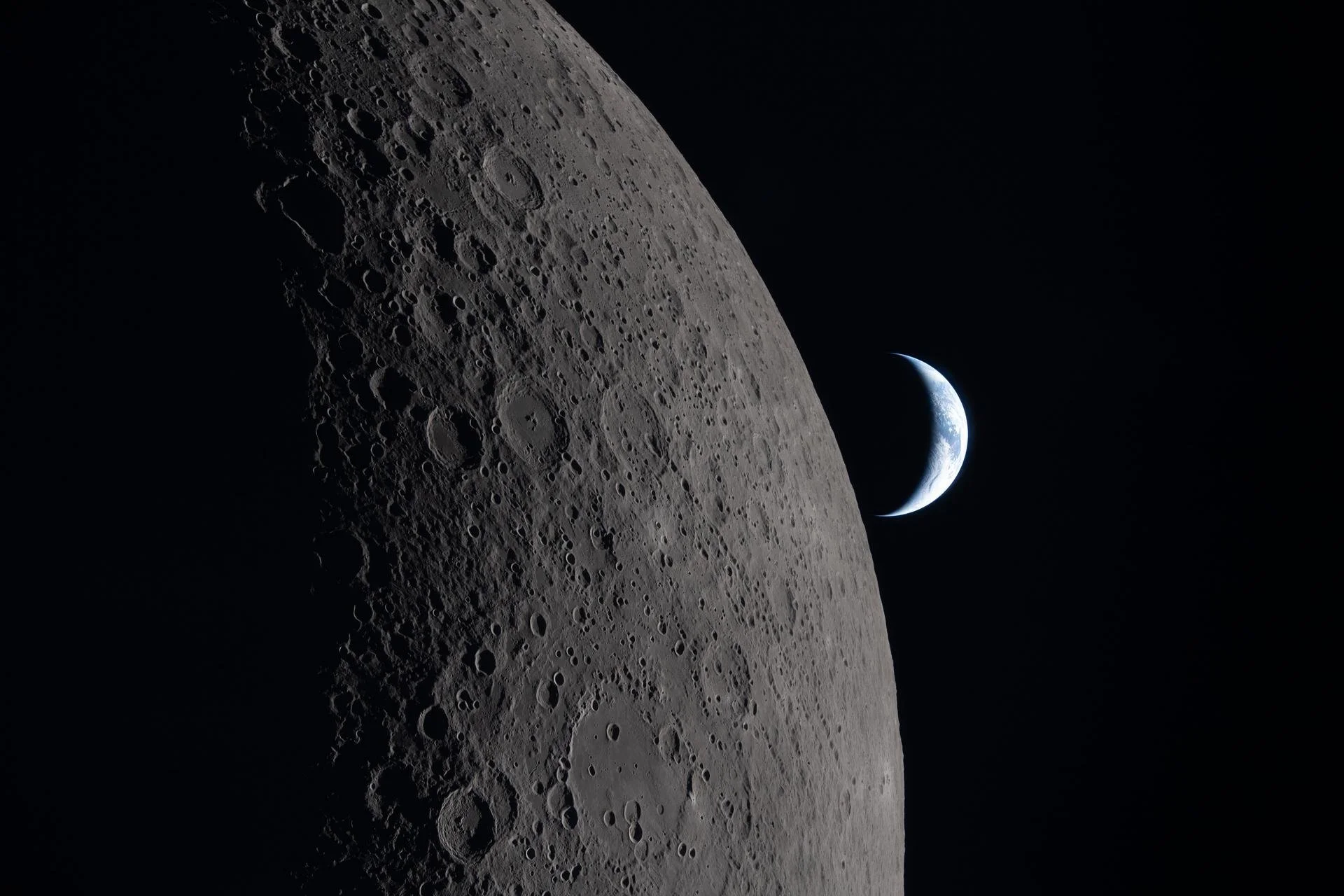
A snap of the moon from the recent Artemis II mission, taken on April 6, 2026. Credit NASA.
There is a reinvigoration around human space travel, and humankind is once again preparing to return to the Moon. However, this time things will be different.
Our intentions extend beyond merely planting a flag, acquiring bragging rights, and then leaving. This time, we have a long-term vision - we are going to establish a permanent presence. This includes establishing a habitable environment on the Moon itself, enabling a continuous human presence. This lunar habitat will serve as a crucial stepping stone, providing invaluable insights and experience for our next goal of settling on Mars. In other words, humanity stands at the precipice of a new era. Missions to the Moon come with a myriad of challenges and even though we have the technology to bring humans to the Moon, there is one problem that we need to address before we go there.
What are we going to eat?
Currently, we do have food systems that can sustain astronauts on short missions to the Moon. However, as missions become longer and we move towards a sustained human presence, food becomes an increasingly important limiting factor for human space travel. The first question we ask ourselves is, can we simply send all the food we need to the Moon? The answer is not that straightforward. First, deliveries to the Moon are costly. Prices per kilogram depend on the rockets and delivery systems that will be used, and even though prices may drop with more efficient launch systems, shipping costs are, let us say, out of this world.
Astrobotic, for example, currently advertises lunar surface delivery at around 1.2 million USD per kilogram, increasing to 4.5 million USD per kilogram if the payload is delivered and operated on a lunar rover. Not only is this very expensive, but launches may also be delayed or fail for various reasons, meaning that sustained lunar operations cannot depend on every resupply mission arriving exactly as planned.
Aside from resource and cost limitations, food delivered from Earth will preferably have a long shelf life, be lightweight, require limited storage and preparation resources, and remain safe, nutritious and acceptable throughout the mission. These challenges become progressively more difficult as missions become longer, and particularly when we start looking beyond the Moon towards Mars.
The issue with these types of foods is that they do not have an organoleptic appeal, meaning they are bland and unappetizing.
The tube-like foods and the nutrient-dense cubes that some people may associate with space food actually got discontinued after the Mercury missions (1961-1963) when the astronauts came back malnourished because they did not want to eat the food, simply because it was too boring. The same thing happened later during the Apollo missions (1962 - 1972) when they tried to make the food a little bit more interesting, but the astronauts did not eat due to the lack of stimulation from both taste and menu fatigue.
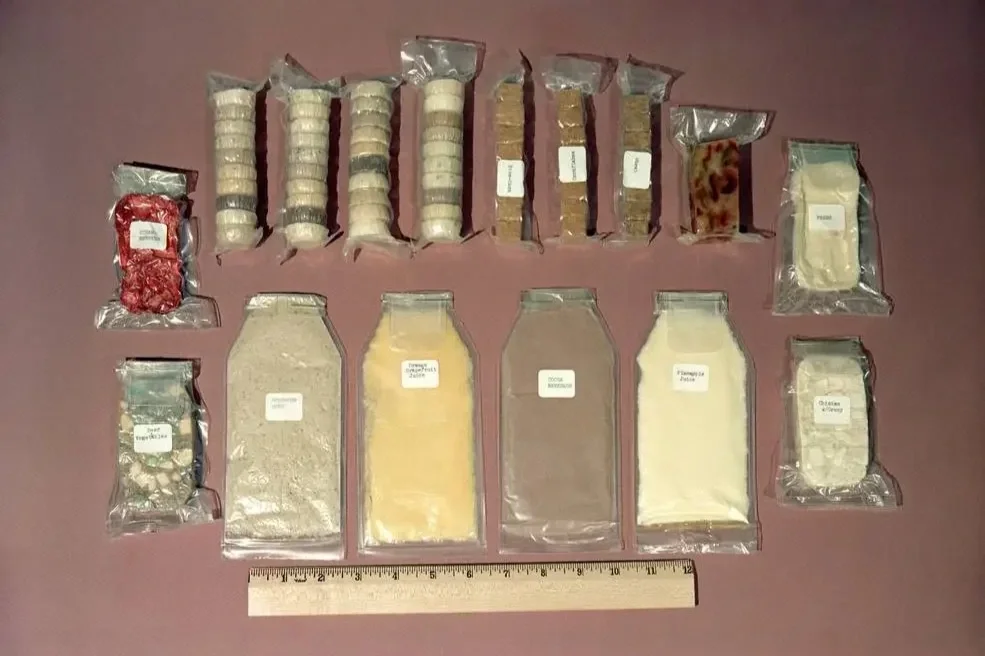
Food packets used by Mercury program astronauts (1961-1963). Astronauts came back malnourished because they did not want to eat the food. Credits NASA.
It is important to recognize the significant role food plays in our lives, beyond being a source of nutrients, as it also contributes to our cultural, social, and emotional well-being.
We cannot forget the sensorial qualities of food, encompassing taste, texture, smell, freshness, and variety, greatly influence our dining experiences. Moreover, food holds an emotional aspect, serving as a source of comfort and nostalgia, reminiscent of our connection to Earth. Socially, it facilitates the act of sharing meals, fostering communication, and providing opportunities for gathering and engaging in meaningful conversations. Additionally, the environment in which food is consumed also shapes our dining experiences.
Food actually plays an important role as a countermeasure to the many psychological challenges that humans experience on deep space missions. Meeting the basic human psychological needs is actually one of the major challenges in space food development. Interestingly, this endeavor has and will lead to significant advancements in the understanding of human food psychology and food philosophy. More on that subject will come later. However, the importance of a healthy diet extends beyond Earth.

Food demonstration by Solar Foods, an international winner of Phases I-III of the Deep Space Food Challenge (2021-2024).
When embarking on deep space missions, including journeys to the Moon, astronauts encounter various physiological and physical challenges resulting from increased radiation exposure and the effects of microgravity on the body. Proper nutrition becomes crucial for astronauts to overcome and survive these challenges. Conversely, the environmental conditions in space severely affect our metabolic processes and the body’s ability to utilize nutrients. These are some of the many challenges that we face when developing food systems for long-term space missions and all of the factors mentioned above need to be taken into consideration. This demands multidisciplinary collaborations and out-of-the-box thinking, which is one of the many interesting aspects when working in the space industry.
To answer the question stated above, do we need to rely on Earth to get food to the Moon?
Initially, yes. Food supplied from Earth will remain an important part of lunar missions. However, as missions become longer and more permanent, this may increasingly be complemented by food production on the Moon. There is unlikely to be a one-solution-fits-all approach. More on that in our upcoming posts.
