Where Are They Now? From Earth Innovation to Space Nutrition: The Solar Foods Journey
How a Finnish company, and one of the Consortium’s latest members, is turning air, water, electricity and microbes into protein. Solar Foods’ journey - including competing in NASA’s Deep Space Food Challenge - demonstrates why the technology could matter both on Earth and far beyond it.
Food is one of the most basic requirements for life, and it is also one of humanity’s largest environmental challenges. Roughly a third of human-caused greenhouse-gas emissions are linked to the food system, while agriculture already uses close to half of the planet’s habitable land. At the same time, a growing and aging global population will need more protein.
For Solar Foods, a Finnish food-technology company, that challenge began with an unusual question: could microbes make nutritious protein using gases instead of fields, animals or sunlight?
The company’s answer is Solein®, a protein-rich ingredient made through a type of fermentation. Instead of feeding microorganisms sugar, the process uses hydrogen, carbon dioxide, water, nutrients and electricity. The microbes grow, are harvested and processed into an ingredient that can be incorporated into foods. Think of it less as a conventional farm and more as a carefully managed microbial ecosystem.
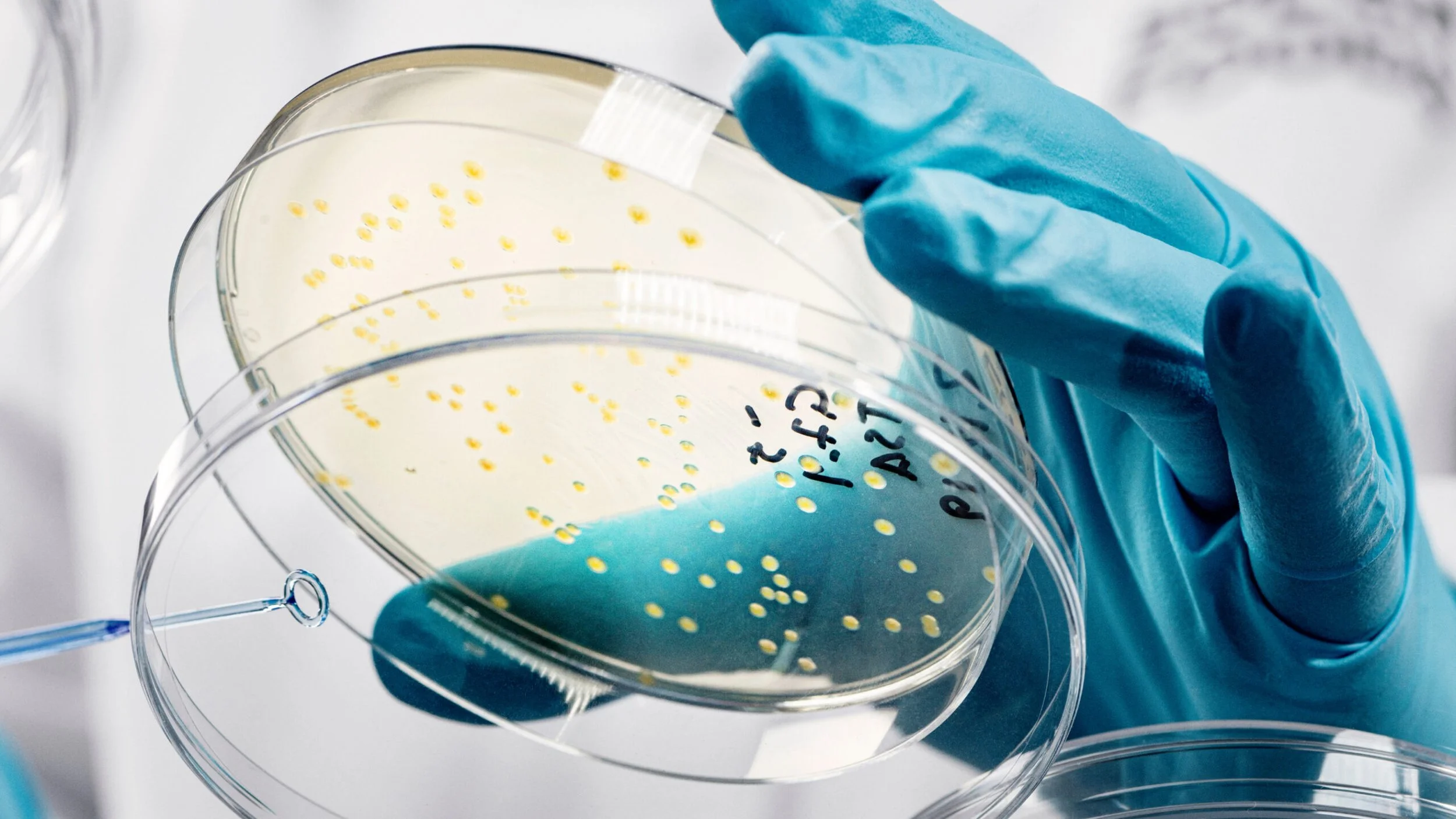
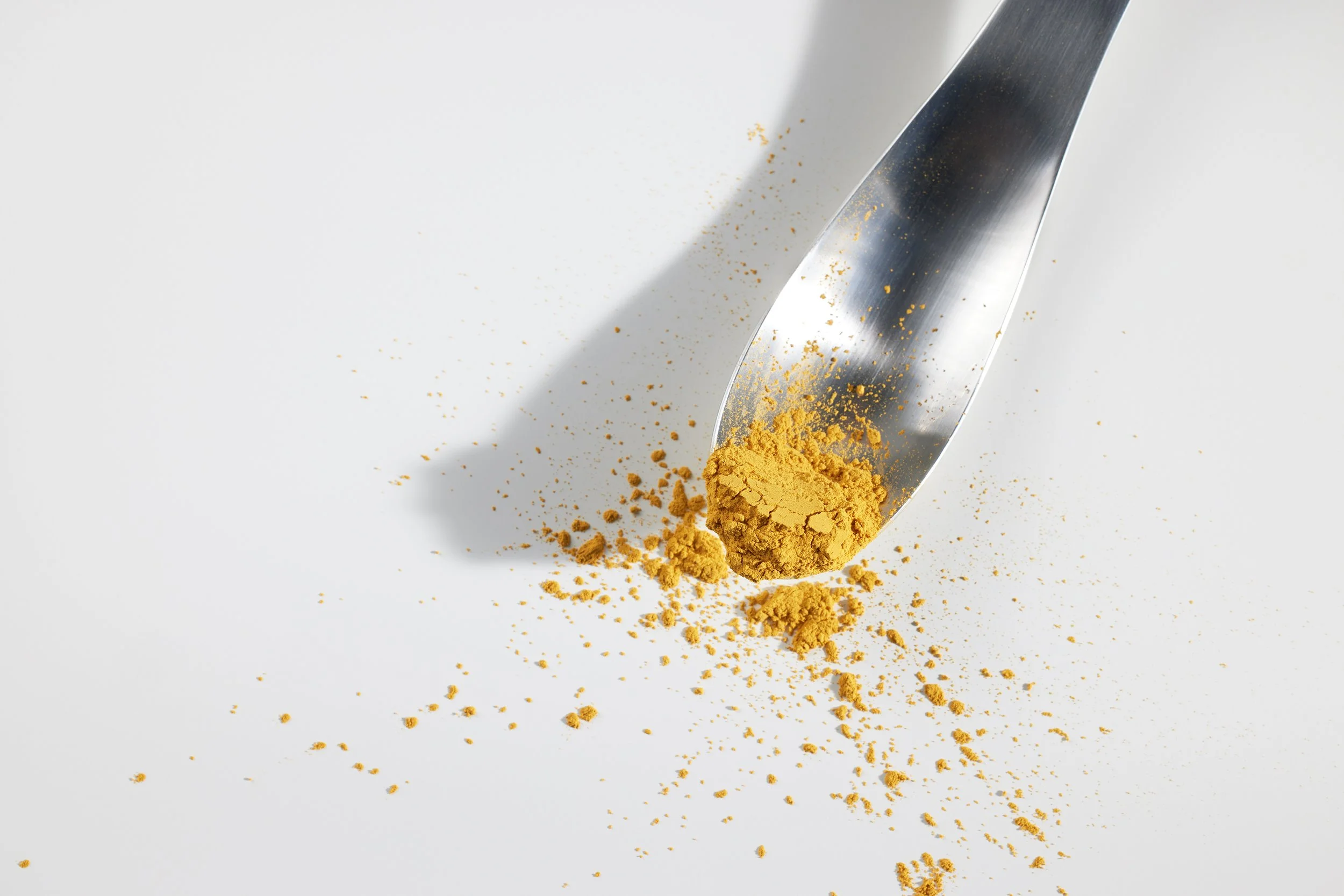
Solein® is a protein-rich ingredient originating from a natural, non-modified, microbe.
The idea may sound futuristic, but it is rooted in decades of science and an increasingly urgent Earth-bound problem. It also happens to have striking potential for future human missions to the Moon and Mars.
A meeting of energy and biology
Solar Foods’ origin story began at VTT, Finland and Northern Europe’s largest technical research center, where two researchers approached the same problem from different directions. Pasi Vainikka was an energy-systems specialist interested in the possibilities of an increasingly electrified society. Juha-Pekka Pitkänen was a chemist-turned-biologist with a rare practical streak: alongside understanding microbes and chemistry, he could build the equipment needed to study them.
Their early conversations centered on the emerging hydrogen economy. Some microorganisms can use hydrogen as an energy source, suggesting a way to turn electricity into biological products. At first, the pair considered biofuels. But a simple calculation revealed a problem: fuel is a low-value commodity, and making enough hydrogen requires substantial electricity.
Protein was a different proposition. Food is also fuel, but it carries far more value per kilogram than transport fuel. The scientists realized that similar gas-fermentation principles could potentially create a food-compatible protein instead.
“Food is fuel as well, but it’s a high-value commodity compared with transport fuel. That changed the equation: the same gas-fermentation principles that didn’t make economic sense for biofuels could potentially produce a food-compatible protein.” — Solar Foods’ SVP of Space and Defense, Arttu Luukanen notes.
The wider vision was never simply to invent a new ingredient. It was to develop a more resource-efficient way of producing food, one that could help reduce pressure on land and climate as demand for protein rises. Solar Foods identified a promising microorganism from Finnish nature that grows well on hydrogen and produces high-quality protein. From there, the task was to turn a scientific possibility into a reliable food-production system.
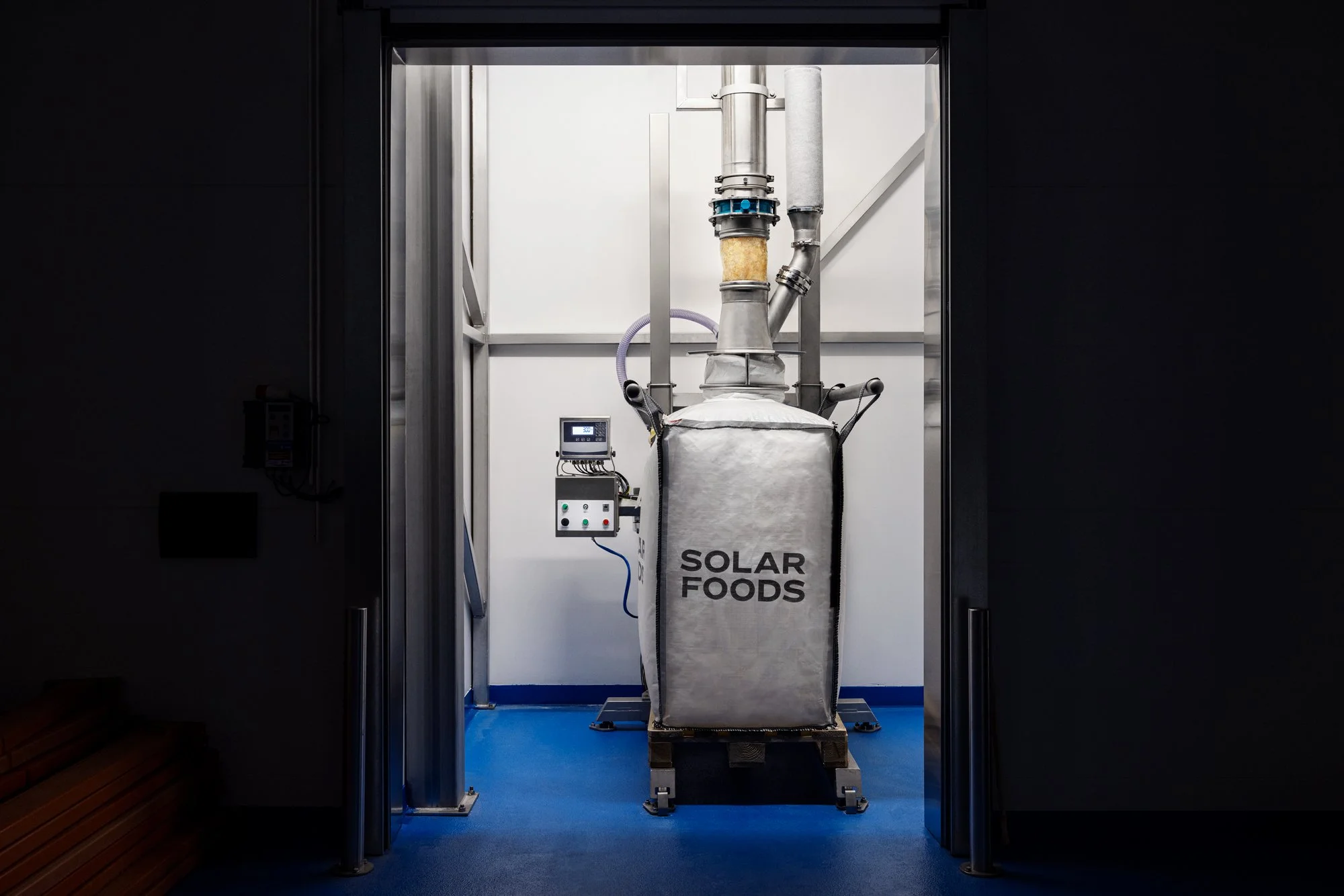
That meant starting small. The team progressed from shake flasks and bioreactors holding less than a liter to a 200-liter pilot reactor operated in a garage. Today, Solar Foods’ Factory 01 contains a 20,000-liter bioreactor, while the company is developing a next-generation facility designed around reactors at least ten times larger.
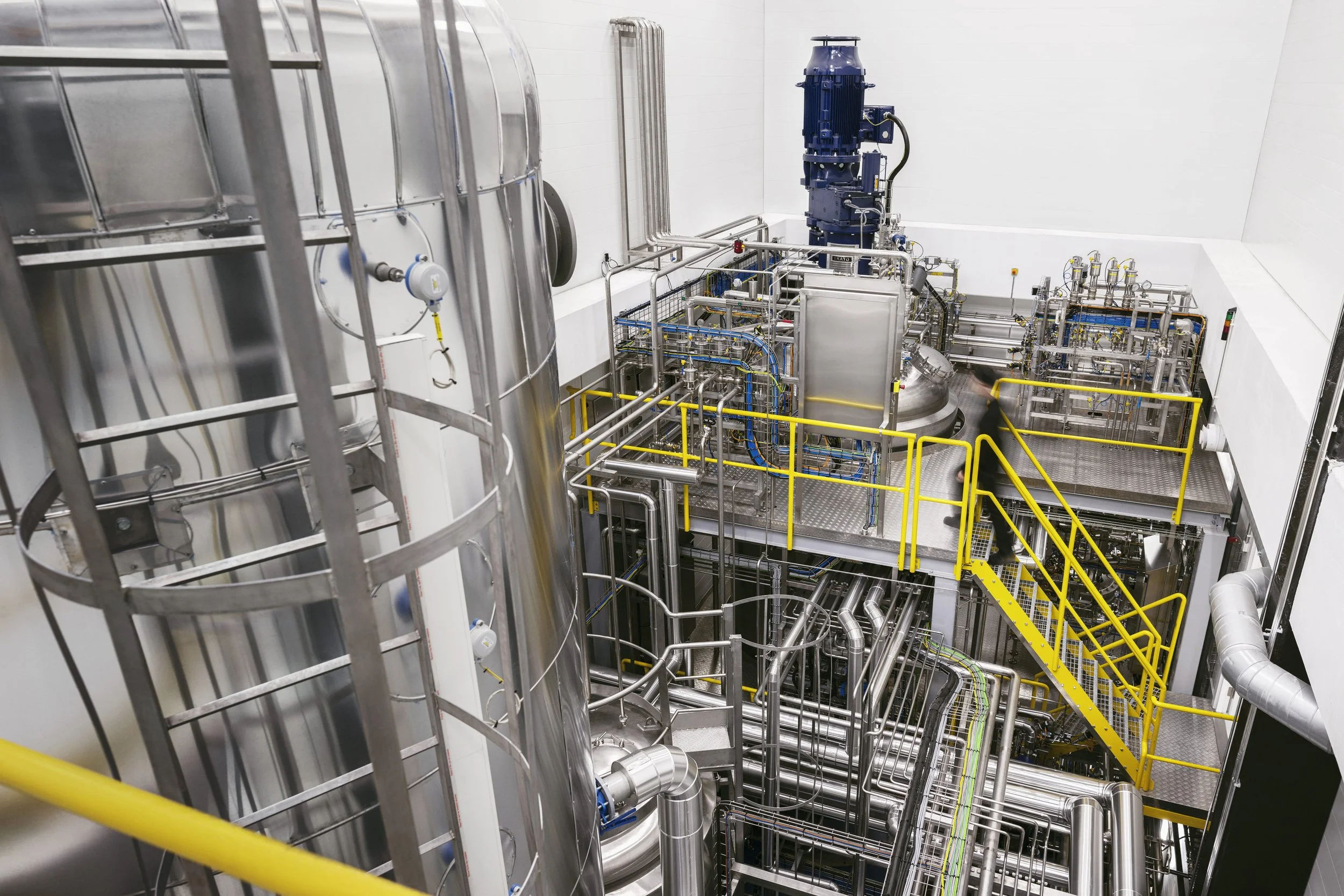
Solar Foods’ Factory 01 bioreactor.
Scaling was not only about producing more material. Because Solein® is a novel food ingredient, it needed to be tested from every angle: composition, nutritional value, safety and functional properties in food. Producing enough material early enough to conduct thousands of analyses became one of the company’s crucial capabilities.
A space idea returns
Long before Solar Foods existed, NASA researchers had explored a closely related idea. In the 1960s, they identified hydrogen-oxidizing bacteria as a potentially promising way to make food in space. A crew habitat already contains some of the necessary inputs: carbon dioxide exhaled by astronauts and hydrogen produced when water is split to generate oxygen.
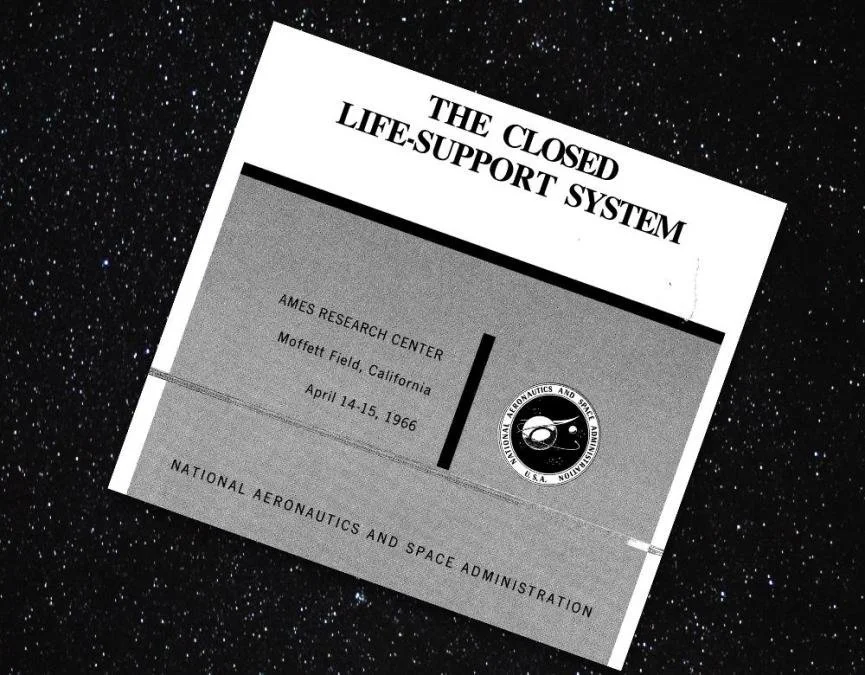
A 1966 report from NASA’s Ames Research Center, titled “The Closed Life-Support System,” marked the beginning of NASA’s research into producing food using CO₂. Its nine chapters outlined different approaches to growing food during extended space missions. Download the report here. Credit: NASA.
The Apollo era ended before sustained onboard food production became a priority, but the basic insight endured. For Solar Foods, space was not the company’s original market. Its technology was developed first and foremost to address the sustainability of food production on Earth. Still, the space connection was impossible to ignore.
When NASA’s Deep Space Food Challenge was announced, Solar Foods Foods was still an early-stage company, operating its 200-liter pilot reactor. The Challenge offered visibility, connections across NASA, the Canadian Space Agency, commercial space companies and fellow competitors, and an opportunity to understand how its approach fit into the emerging space-food ecosystem.
More importantly, it required the team to think beyond the reactor itself. A terrestrial factory can rely on water separation equipment, regular inspections and process engineers who monitor performance. A spacecraft cannot. Crew time is scarce, power and mass are limited, and each system must work safely and predictably in a highly constrained environment.
The Challenge pushed Solar Foods to confront these system-level realities. How might water be removed without relying on conventional centrifuges? How could the process be automated enough that astronauts do not have to spend their days monitoring a fermenter? What would it take to operate a biology-based system safely with hydrogen and oxygen onboard?
Those questions have value well beyond space. Better automation, sensing and control can improve product consistency, increase yield and reduce the labour required to run future factories on Earth.
Validation, then engineering
Solar Foods was ultimately named the International Winner of the Deep Space Food Challenge. For the company, the award was more than a trophy. It represented independent validation from a broad panel of experts in space agencies, academia and commercial spaceflight.
“We don’t need to debate whether the idea we proposed was a good one,” Solar Foods’ SVP of Space and Defense, Arttu Luukanen notes. “The judging panel selected us to win. The next step is: can we actually make it work?”
That question now drives the company’s space program. Even during the Challenge, Solar Foods began engaging with the European Space Agency (ESA). Its first project examined the architecture proposed for the Challenge in greater engineering detail: the system’s size, weight and power needs, its necessary subsystems and the gaps that still need to be solved.
Solar Foods is now working through HOBI-WAN (Hydrogen Oxidizing Bacteria In Weightlessness As a source of Nutrition), a project intended to fly the company’s first gas-fermentation reactor in space. The goal is fundamental but essential: test whether the microorganism survives the space environment and grows as expected. The company hopes a flight-ready system could launch in 2028.
Before then, there is a substantial checklist. One prospective step is to send Solein®-based snacks to astronauts on a mission, because taste and appetite can change in microgravity. A food system must not only be nutritious; it must produce foods people actually want to eat.
The underlying biology and engineering must also adapt to weightlessness. On Earth, a stirred tank mixes gases and liquid with an impeller. In microgravity, liquids behave differently, making that approach unsuitable. Solar Foods is exploring hollow-fibre modules, which work somewhat like lungs: gases pass through tiny silicone fibers into the surrounding growth medium. The concept could provide gravity-independent gas transfer.
Other issues are equally practical. Living cells must remain viable through a potentially long pre-launch dormancy period, perhaps by freeze-drying an inoculum that can later start the culture. The system will need robust containment and safety measures for hydrogen and oxygen. And it must collect data, detect potential contamination and, eventually, return samples to Earth so scientists can confirm the microorganism remains unchanged.
AI and machine learning may help. In the future, process data could enable software to optimize growth while maintaining the desired composition, or to identify anomalies without the space and supplies required for conventional laboratory testing. Solar Foods is also exploring digital-twin approaches within the company. These tools are not yet a finished recipe, but they point toward the degree of autonomy a truly operational space food system will require.
One ingredient in a larger food system
No single technology will feed a crew on a journey to Mars, and Solar Foods does not see Solein® as a complete menu. It is one important part of a broader system that would need carbohydrates, vegetables, varied ingredients, reliable life-support infrastructure and food that supports both nutrition and morale.
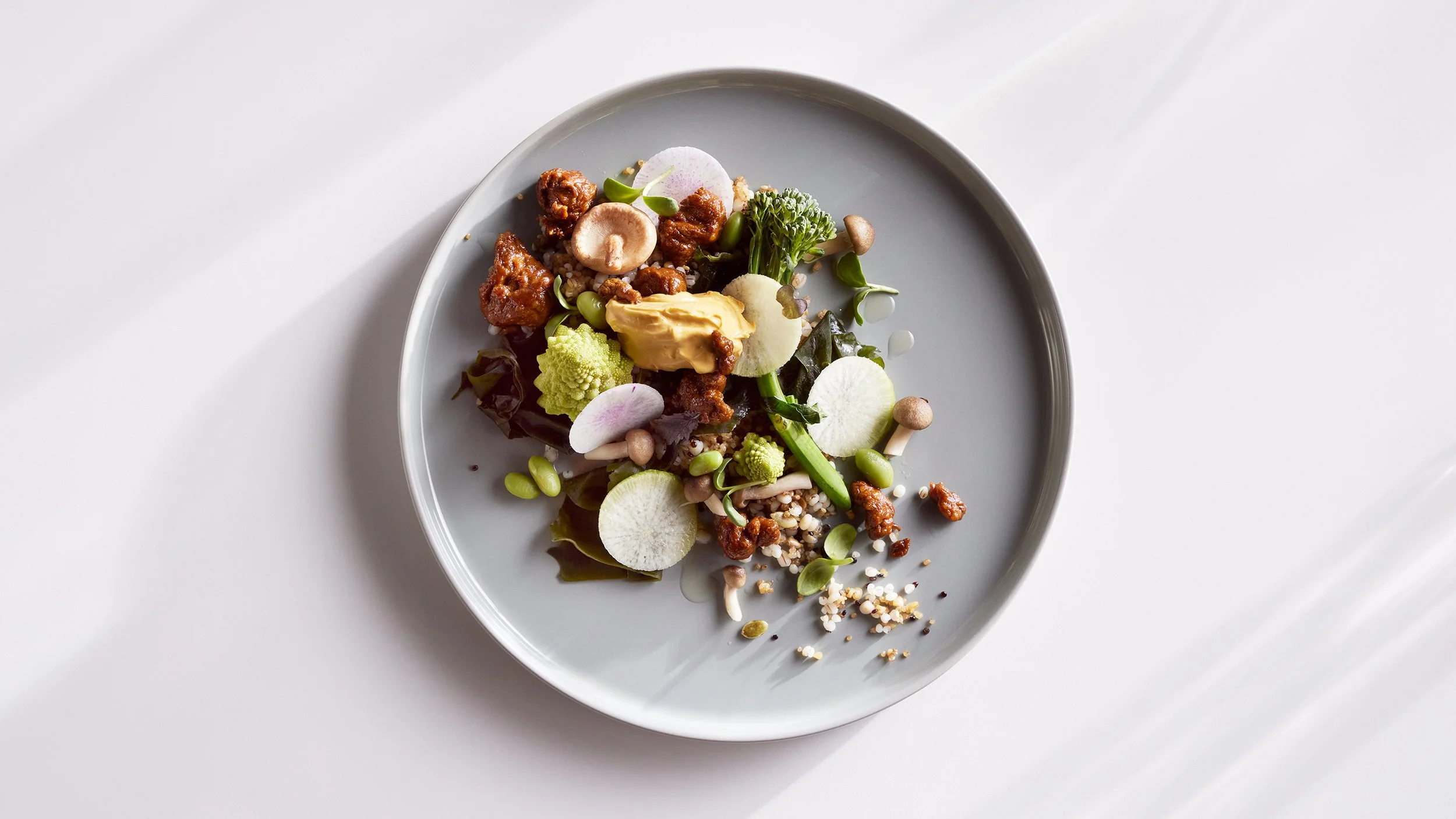
Its role could be particularly flexible. Solein® can be used in protein shakes, but it also has useful functional properties in food. Solar Foods says it can emulsify water and oil more effectively than egg-yolk powder, opening possibilities for foods such as mayonnaise, cheese and other familiar products. Combined with crops or other locally produced ingredients, it could help turn a technically efficient system into meals with texture, variety and appeal.
There is another systems-level benefit. If a microbial production system can help close gas and water loops within a spacecraft’s environmental control and life-support system, it could reduce the mass that needs to be launched. For commercial space stations, where sending supplies to orbit is a major cost, that could become economically meaningful as well as operationally useful.
What works for space may matter on Earth
The road to space may also create new options in hard-to-reach places on Earth.
Space-oriented systems must be compact, robust, maintainable and able to operate with limited logistics. Those are similar requirements in remote regions, polar stations and humanitarian settings where calories may arrive but protein remains scarce.
Solar Foods is exploring the idea of packaging a small production system into a shipping container, enabling distributed protein production in places such as the Canadian Arctic, Antarctica or regions facing disrupted supply chains. An Antarctic research-station project has already prompted interest in whether a local protein-production unit could be part of a future facility.
These installations could serve as valuable precursors to a Martian surface system. They would reveal failure modes, maintenance needs and required spare parts under isolated conditions, while delivering useful capability on Earth today.
This is where the Deep Space Food Consortium can play an important role. A space food system will require many technologies and organizations to work together: life-support specialists, crop developers, food scientists, culinary experts, station operators and companies such as Solar Foods. Early collaboration makes it easier to understand how each output can support the next part of the system.
For Solar Foods, joining the Consortium creates a way to build those connections now. Commercial space-station companies may initially host its experiments; in time, they could become customers for a system that reduces logistics costs. Equally, future partnerships with crop and food developers could help translate Solein® and other ingredients into meals that crews are glad to eat.
The journey from a Finnish laboratory to a future spaceflight is still underway. But Solar Foods’ story shows how a challenge designed for deep space can accelerate ideas with relevance much closer to home. The question is no longer only whether we can make protein from air, water and electricity. It is how we can build the connected, resilient food systems needed to make that possibility matter.